Eritrea Flag for Indoor & Outdoor Use
- Yes: Available
- Model: ER-001
Safety
Easy and secure payment in a few clicks.
Fast Return
Quick return window of 14 days.
To any point
Worldwide shipping without limits and boundaries.
Quality
We make every item ourselves and guarantee quality.
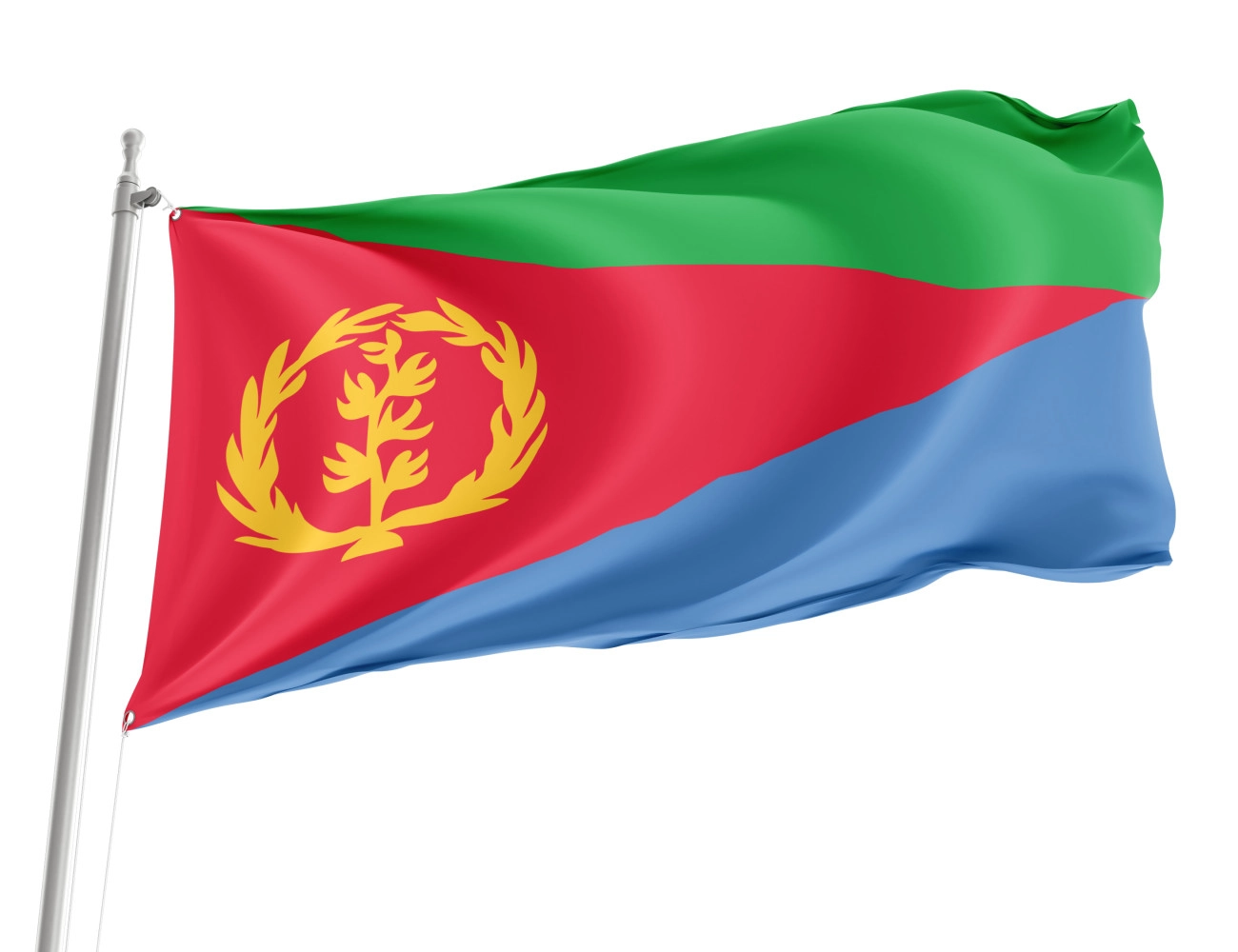
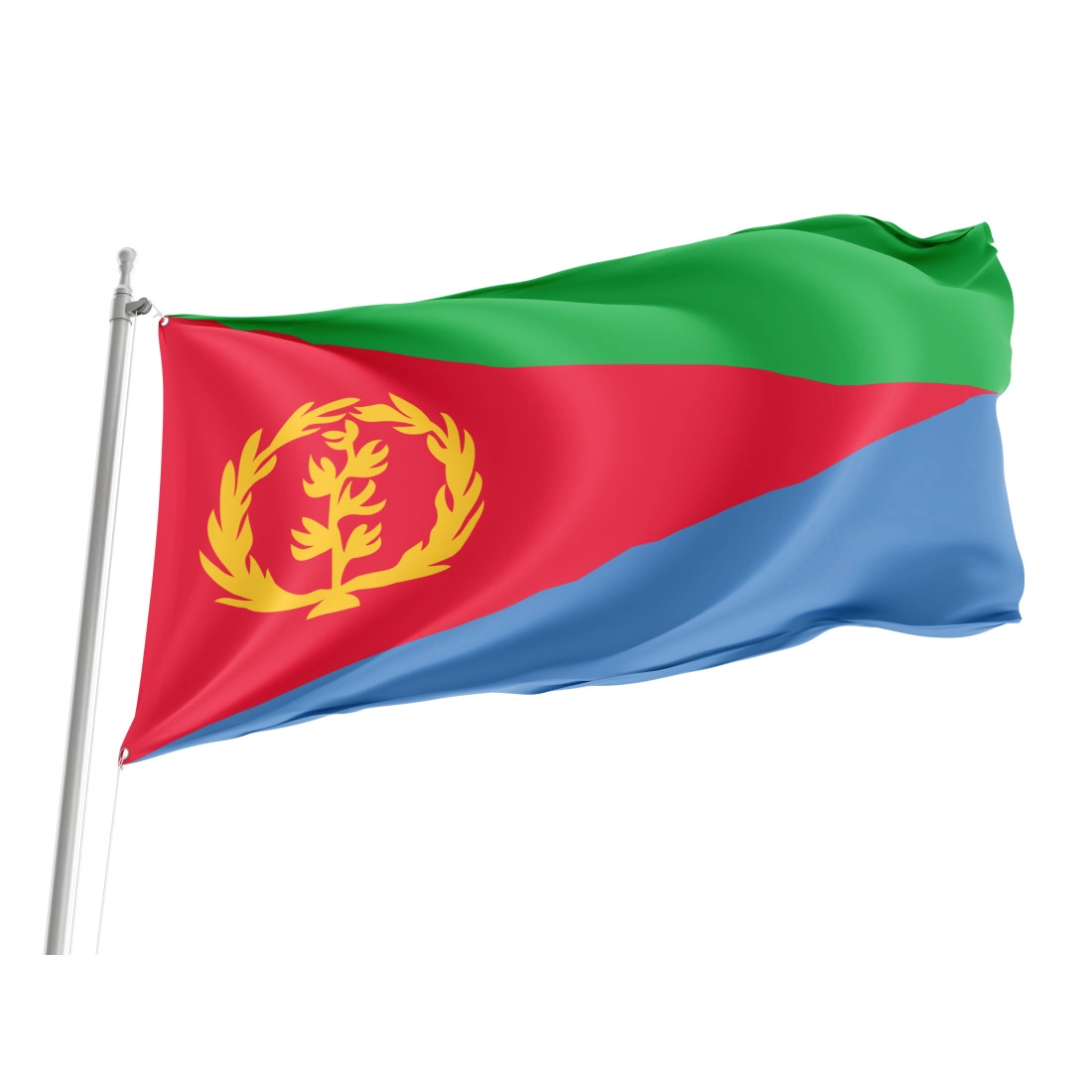
Recognisable by its bold triangular design and golden olive emblem, the Eritrea flag is a meaningful national symbol for Eritrean homes, community gatherings, cultural celebrations and international events. This durable polyester flag can be displayed indoors or outdoors and is available in several practical sizes.
History of the Eritrea Flag
The olive symbol has an important place in Eritrean flag history. In 1952, the flag of autonomous Eritrea featured a green olive branch and wreath on a blue background. During the later struggle for independence, different flag designs were used by Eritrean liberation movements.
When Eritrea became an independent country on 24 May 1993, the new national flag combined the green, red and blue triangular design with the historic olive emblem. The present version of the flag was officially adopted on 5 December 1995.
How the Modern Design Developed
The triangular layout was influenced by the flag used by the Eritrean People’s Liberation Front. Its original yellow star was replaced with the olive branch and wreath derived from the earlier 1952 Eritrean flag. This connects the modern national flag with two important periods in the country’s history.
Meaning of the Colors and Olive Emblem
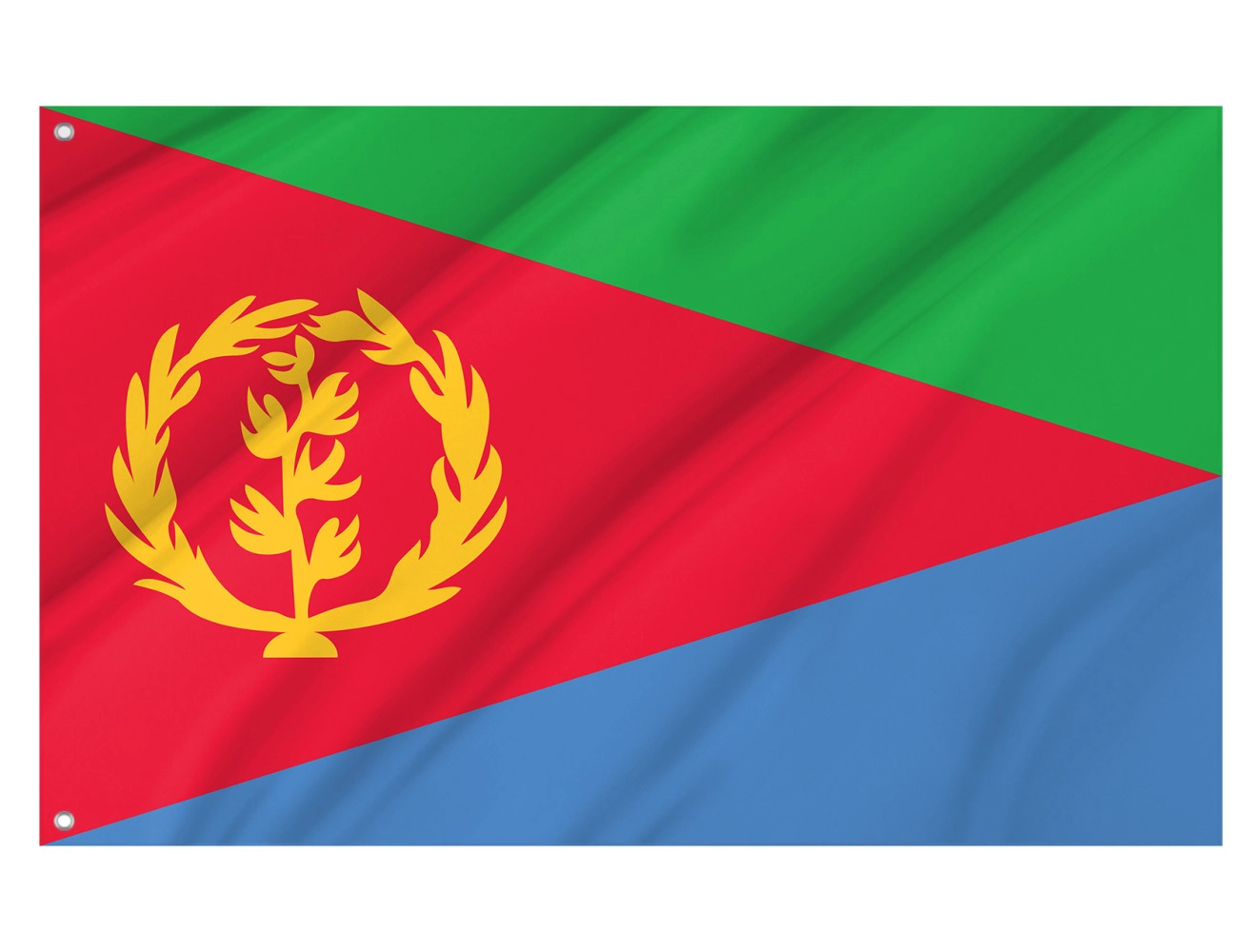
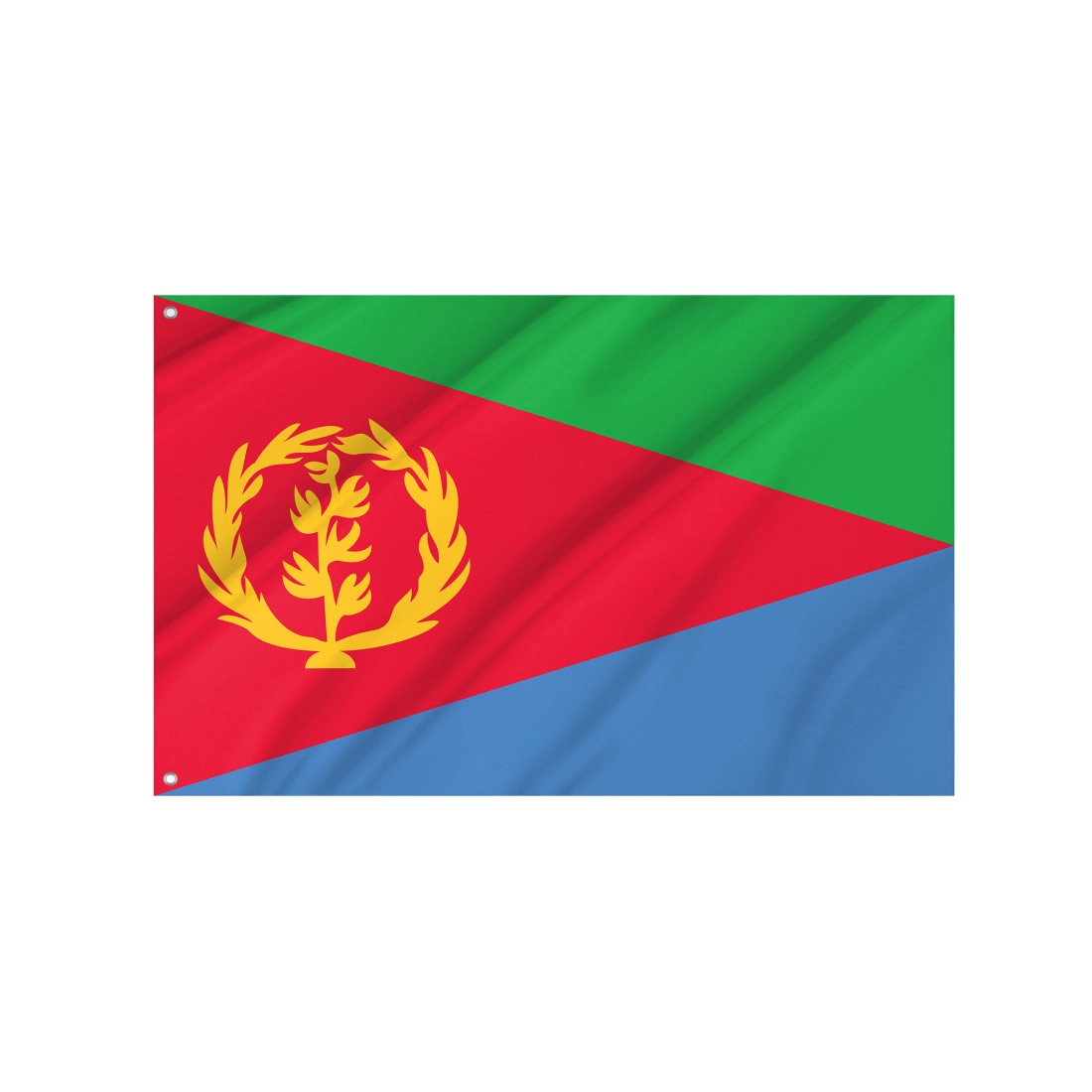
- Green: Represents Eritrea’s agriculture, fertile land and livestock.
- Blue: Symbolises the Red Sea and the country’s marine resources.
- Red: Remembers the sacrifices made during the struggle for independence.
- Golden yellow: Is commonly associated with the country’s mineral resources.
- Olive branch and wreath: Represent peace and preserve an important symbol from the 1952 Eritrean flag.
- Thirty leaves: Are widely associated with the thirty years of armed struggle for independence between 1961 and 1991.
Durable Eritrea Flag for Everyday Display
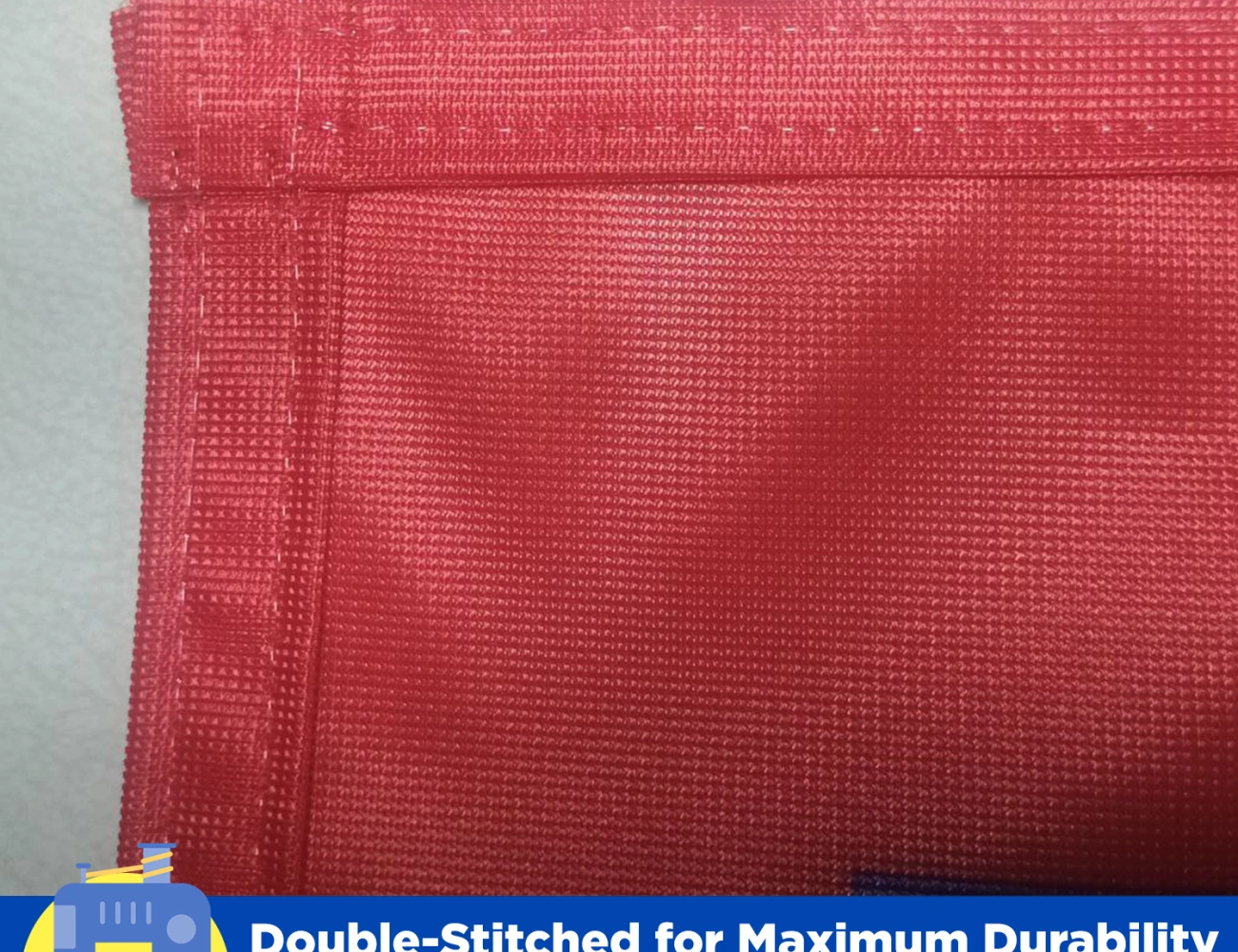
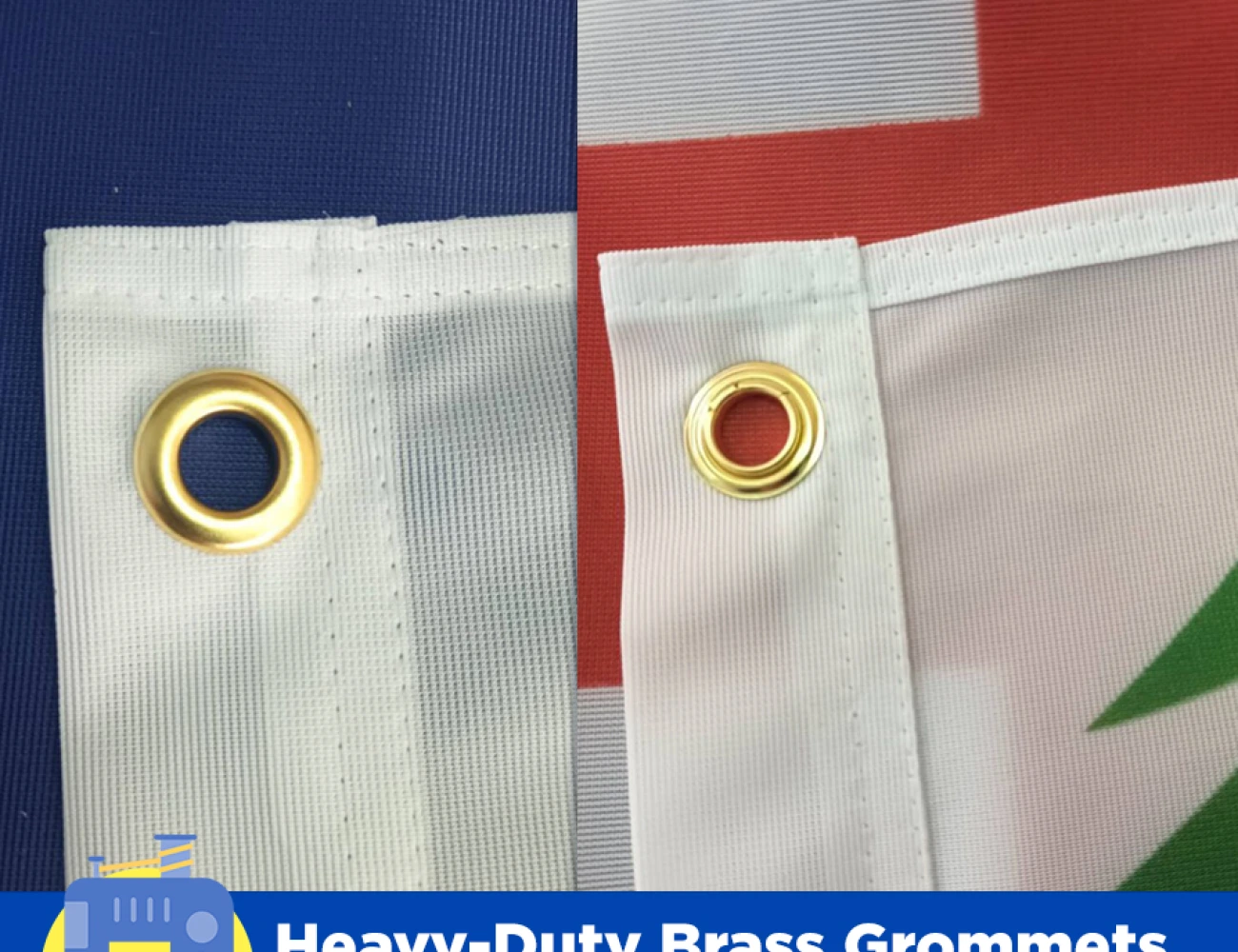
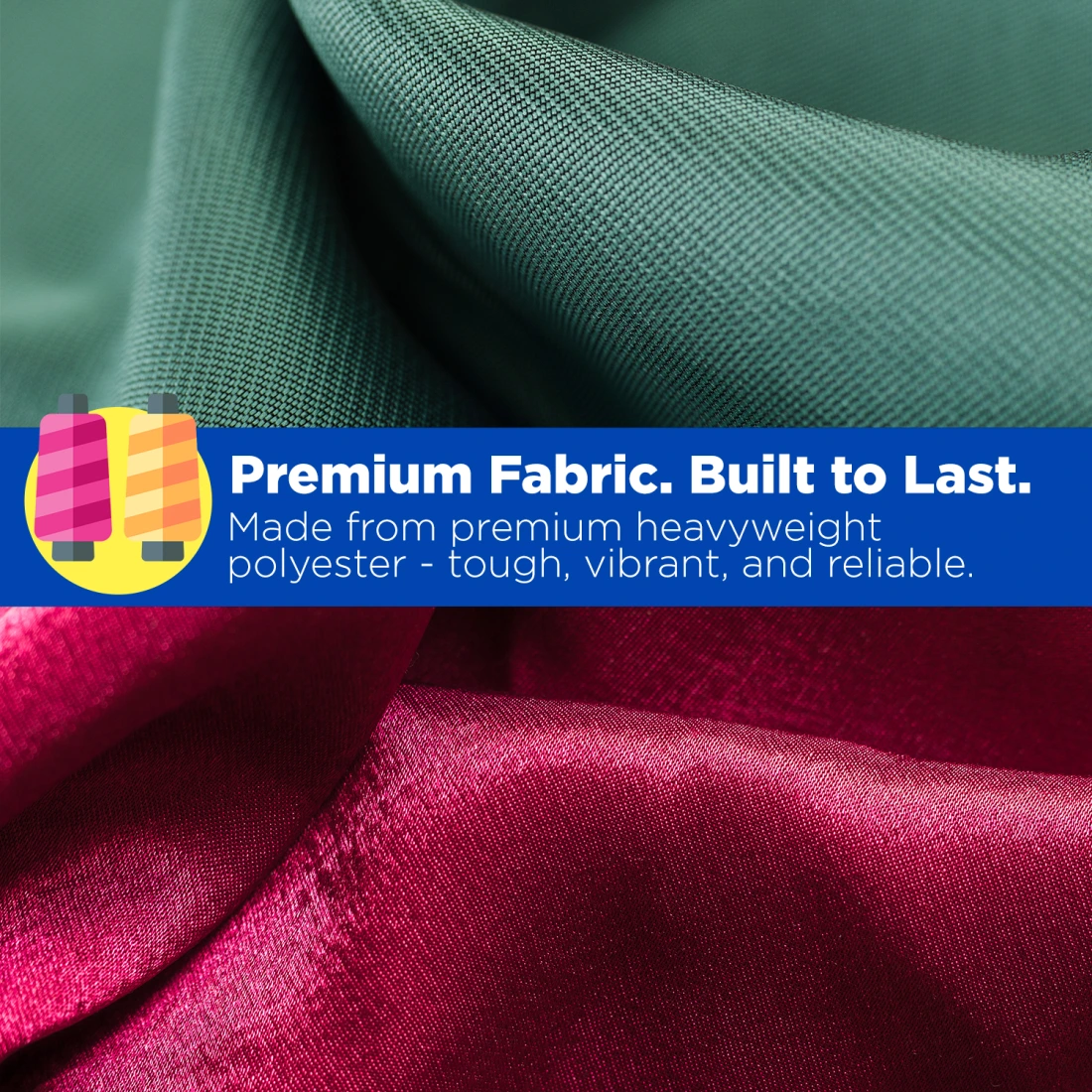
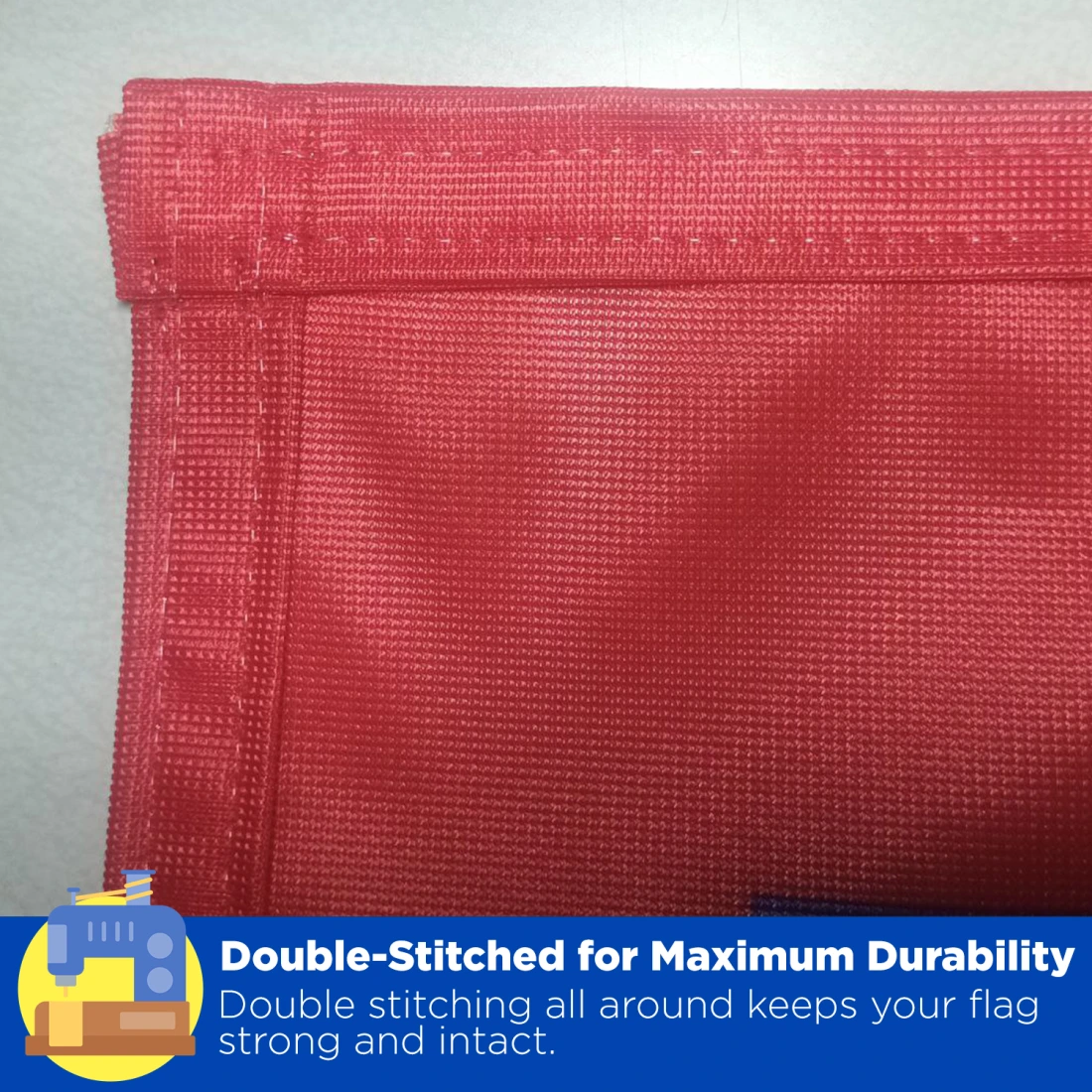
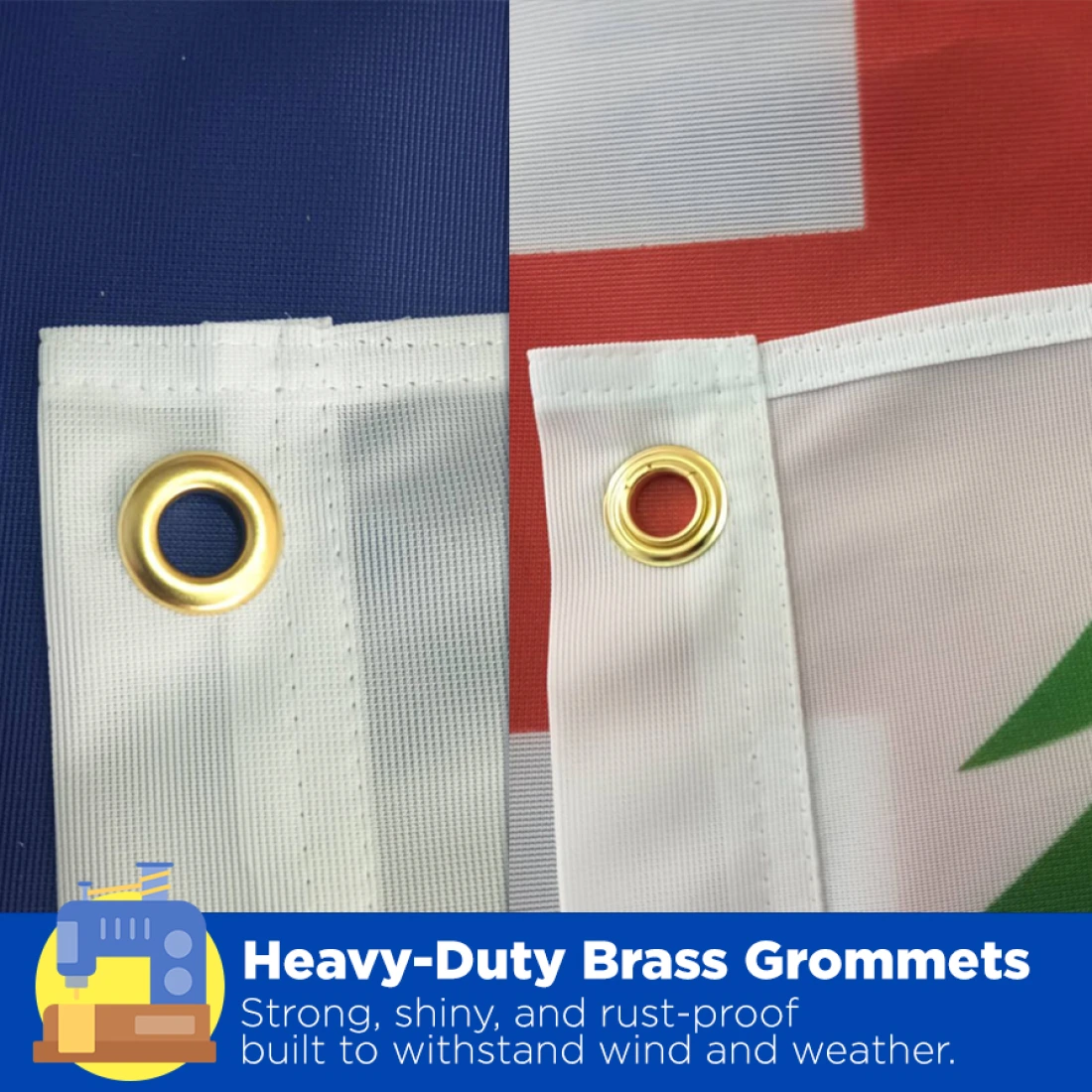
The flag is manufactured from 115 g/m² polyester, making it lightweight enough to fly while remaining suitable for regular display. Reinforced edges and double stitched seams provide additional strength, while two rust resistant brass grommets allow convenient attachment to a flagpole, wall or balcony.
Construction and Product Features
- Durable 115 g/m² polyester fabric
- Reinforced edges for improved resistance
- Double stitched seams
- Two rust resistant brass grommets
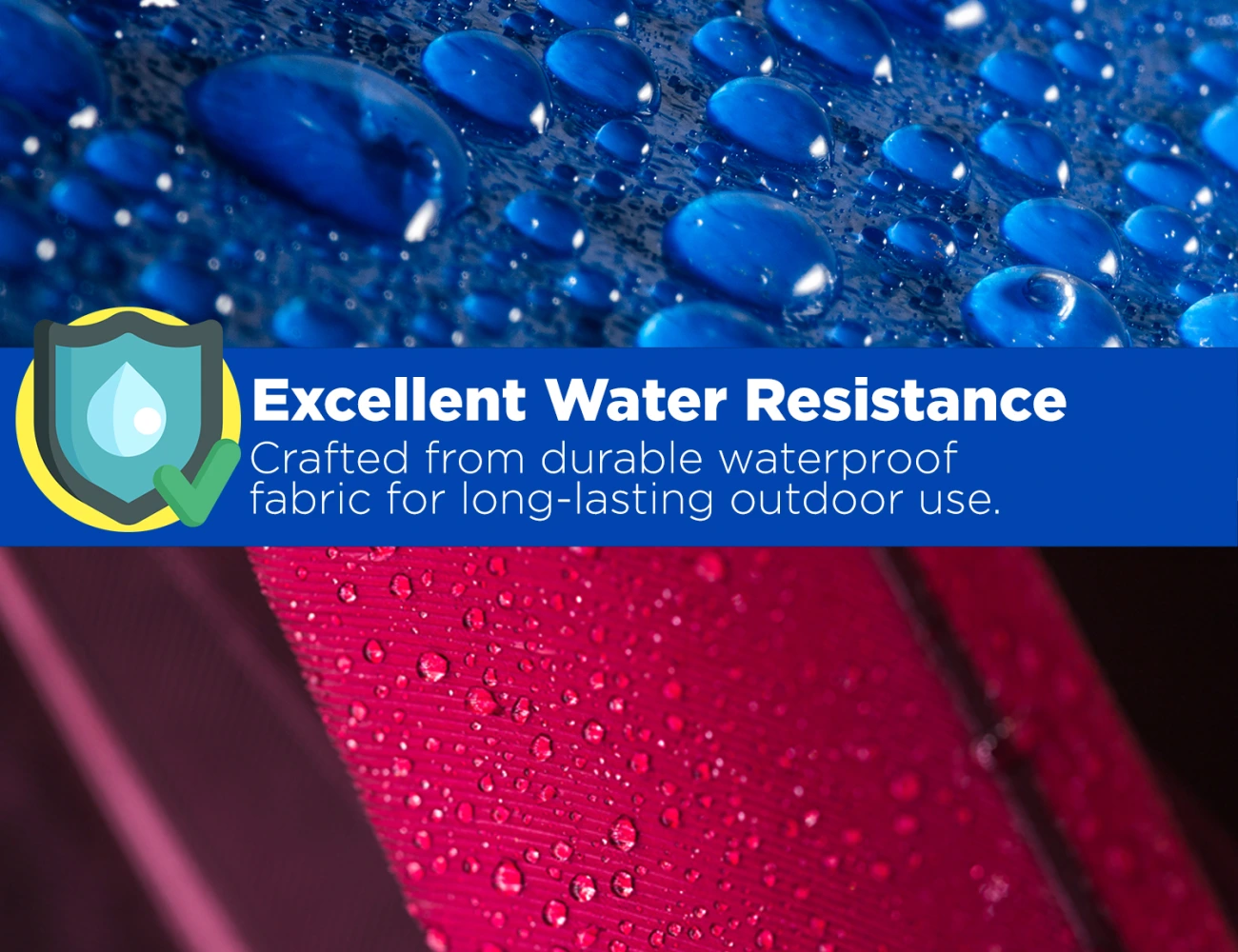
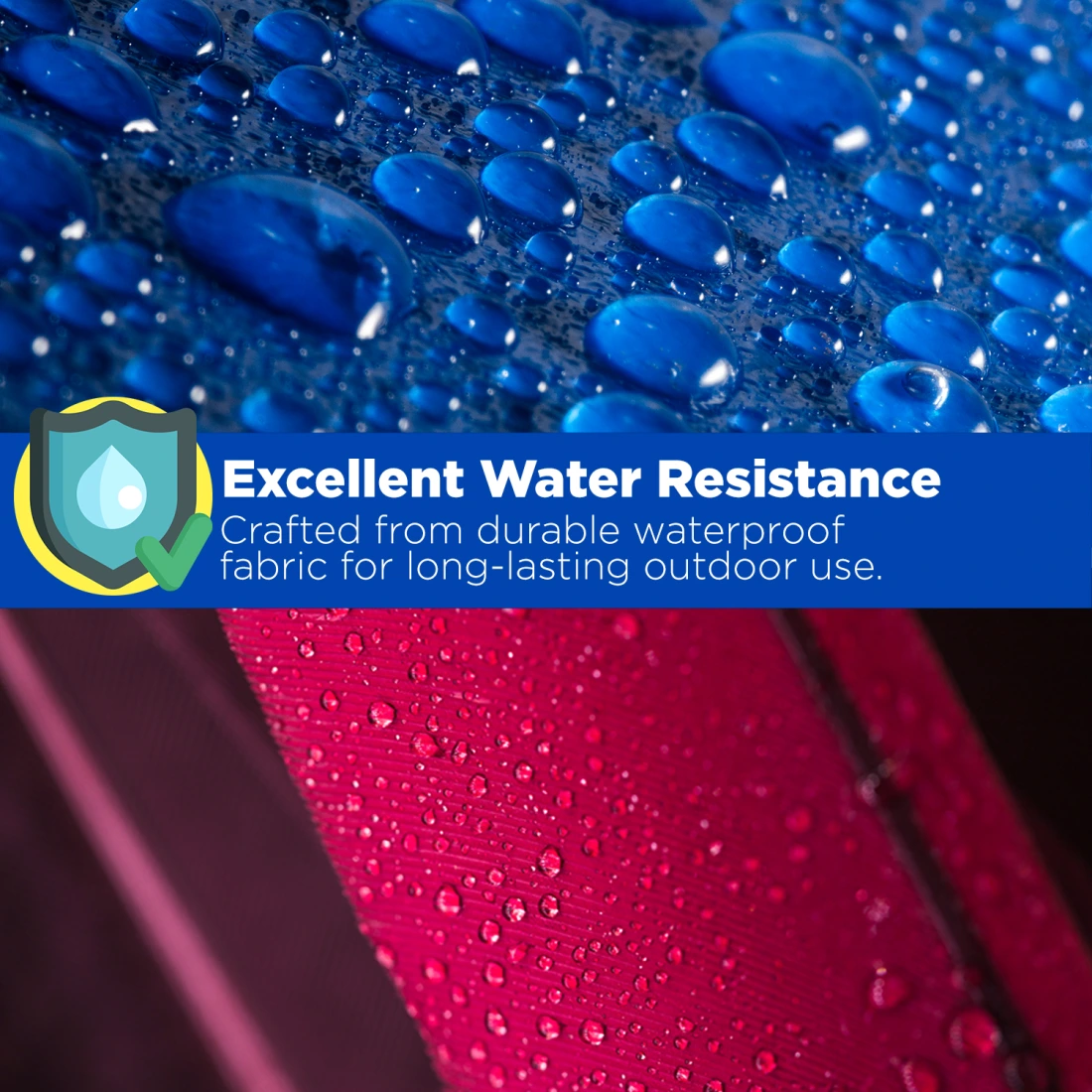
- Water resistant material with UV protection
- Suitable for indoor and outdoor display
- Single sided print with approximately 90% visibility on the reverse
- Machine washable at 30°C
- Available in five different sizes
- Free worldwide shipping
Available Eritrea Flag Sizes
| Metric Size | Approximate Imperial Size | Suggested Use |
|---|---|---|
| 50 × 75 cm | 1.66′ × 2.50′ | Small rooms, windows, caravans and compact wall displays |
| 60 × 90 cm | 2′ × 3′ | Balconies, bedrooms and smaller flagpoles |
| 90 × 150 cm | 3′ × 5′ | Homes, gardens and standard residential flagpoles |
| 120 × 180 cm | 4′ × 6′ | Community centres, businesses and larger outdoor displays |
| 150 × 250 cm | 5′ × 8′ | Festivals, public gatherings and high visibility locations |
Which Eritrea Flag Size Should You Choose?
For most homes and standard flagpoles, the 90 × 150 cm flag offers a good balance between visibility and convenient handling. The smaller sizes are suitable for balconies, windows and indoor decoration. Choose one of the larger sizes for community events, commercial locations or displays intended to be seen from a greater distance.
Single Sided Printing and Reverse Visibility
The Eritrea flag is printed on one side of the polyester fabric. The colours remain approximately 90% visible from the reverse, where the triangular design and olive emblem appear mirrored.
Where Can the Eritrea Flag Be Displayed?
- Homes, gardens, balconies and residential flagpoles
- Eritrean Independence Day celebrations on 24 May
- Eritrean community and cultural gatherings
- African heritage festivals and international events
- Schools, universities and geography displays
- Restaurants, travel businesses and cultural organisations
- Sporting events and supporter displays
- Flag collections and gifts for people with Eritrean heritage
Care Instructions
Wash the flag at a maximum temperature of 30°C using a gentle washing programme. Do not use bleach and allow the fabric to air dry. Removing the flag during severe storms, exceptionally strong winds or prolonged extreme weather can help preserve its colours and stitching.
Frequently Asked Questions
What does the Eritrea flag look like?
The flag has a red triangle extending from the hoist towards the fly, with a green triangle above and a blue triangle below. A golden olive branch surrounded by an olive wreath appears inside the red section.
When was the present Eritrea flag adopted?
The basic national design was introduced when Eritrea became independent on 24 May 1993. The present version was officially adopted on 5 December 1995.
What do the colors of the Eritrea flag mean?
Green represents agriculture and livestock, blue represents the Red Sea, and red recalls the sacrifices made during the struggle for independence. Golden yellow is commonly associated with mineral resources.
Why is there an olive branch on the flag?
The olive branch and wreath are derived from Eritrea’s 1952 flag. The olive motif is generally associated with peace and provides a historical connection between the earlier and modern flags.
What do the thirty olive leaves represent?
The thirty leaves are widely interpreted as representing the thirty years of Eritrea’s armed struggle for independence from 1961 until 1991.
Can the Eritrea flag be displayed outdoors?
Yes. Its polyester material, reinforced edges, double seams and brass grommets make it suitable for regular outdoor and indoor use.
How is the flag attached to a flagpole?
Two brass grommets are positioned along the hoist edge. They can be connected to compatible flagpole hooks, clips or other suitable fittings.
Is the Eritrea flag printed on both sides?
No. The design is printed on one side and remains approximately 90% visible from the reverse, where it appears mirrored.
Can the flag be washed?
Yes. It can be machine washed at up to 30°C on a gentle cycle. Air drying is recommended.
What is the most popular Eritrea flag size?
The 90 × 150 cm or 3′ × 5′ size is a popular choice for homes, gardens and standard flagpoles. Smaller and larger formats are available for different display areas.
We offer several payment methods, very easily and conveniently you can pay through Stripe and PayPal using your credit card or account.
The connection is well encrypted through the external payment providers Stripe and PayPal which guarantees security and convenience.
The information on the credit card (number of the card, expiry date etc.) are forwarded automatically via a coded security system to the Paymaster without „Teesntowels“ ltd or any third party having any kind of access to this data. Even in the event of a possible refund, the complete credit card details cannot become known. This is why a refund is only possible on the card with which the purchase was originally made. The financial information connected with credit card transactions (number of the card, expiry date etc.) are automatically forwarded with a coded message without „Teesntowels“ ltd or a third party having any access to them. Except in the event of a refund on possible returns, this information will never again be used.
Please note that the credit card account is directly debited but the payment is under review by our service provider. We are not allowed to send out the order until the payment is verified.
Please be also aware that with credit card payments the billing address and the delivery address must be both either within or outside EU.
Online security
www.teesntowels.com uses the security software SSL (Secure Socket Layer). This is an asymmetrical encoding method in the Internet that protects your credit card data from being overheard or manipulated whilst your credit card data is being transmitted. It is therefore impossible for any unauthorized person to read this data whilst it is being transferred in the Internet.